Earlobe repair is a minor, in-office procedure under local anesthesia that fixes split, torn, or stretched (including gauged) earlobes. The surgeon refreshes the edges and closes them with fine sutures; most cases have minimal downtime and quick return to routine activities.
Cost in Canada depends on whether one lobe or both are treated, how much tissue was lost, and whether the lobe is reshaped at the same time as it is closed. Healing is quick for most people, but re-piercing is usually delayed about six to twelve weeks so the scar has time to settle and hold a new hole. If the lobes are thinned, elongated or heavy rather than split, a surgeon may discuss an earlobe reduction alongside repair, so recommendations and results vary by patient and by provider. A consultation with a certified plastic surgeon is the way to confirm which applies, and Beautifi can help you explore qualified providers and financing.


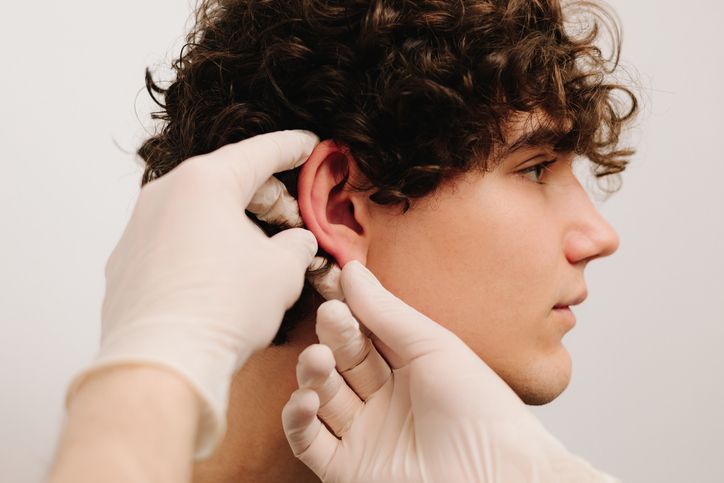
Most Canadian clinics price earlobe repair per lobe, and the total depends on how much tissue was lost, whether one or both ears are treated, and whether the surgeon reshapes the lobe as well as closing it. A simple split closed under local anesthetic sits at the lower end; a stretched or gauged lobe that needs tissue rearranged costs more because it takes longer and is technically harder. Fees quoted at consultation usually cover the surgeon, the local anesthetic and follow-up visits, so ask what is included before comparing two numbers. Provincial health plans do not cover repair done for appearance, and Beautifi can help you spread the cost over monthly payments.
Not reliably. A fully split lobe has two healed skin edges facing each other, and skin will not bond to skin without those edges being freshened first, which is a surgical step. At-home glue kits, tapes and repair creams sold online can hide the gap temporarily but do not rejoin the tissue, and adhesives applied to broken skin can irritate it or trap infection. A partially stretched hole that has not torn through may tighten on its own if you stop wearing heavy earrings, so that is worth trying first. Where the lobe has split through the edge, closure by a qualified provider is the option with a predictable result.
Most people go back to routine activities the same day or the next, with mild soreness and swelling for a few days. Sutures are usually removed at about one week, and the ear is kept clean and dry in the meantime. The scar looks pink and firm at first, then softens and fades over several months, which is why the final appearance is judged at six months rather than six weeks. Re-piercing is normally delayed about six to twelve weeks so the repair is strong enough to hold a new hole, and the surgeon will usually site it away from the scar line. Avoid heavy or dangling earrings while healing.
Look for a physician certified by the Royal College of Physicians and Surgeons of Canada in plastic surgery, or a dermatologist with surgical training, and confirm the certification on the provincial college register. Ask how often they do earlobe repairs, and ask to see before and after photographs of lobes similar to yours, particularly if yours is stretched rather than cleanly split. A good consultation covers where the scar will sit, when you can re-pierce, and what happens if the repair thins or reopens. Price alone is a poor guide for a procedure this small, because the difference between a good and a poor result is the closure technique rather than the time it takes.
Remove earrings from the lobe being treated and leave them out beforehand, and come with clean hair that will not need washing over the ear for a day or two. Tell your surgeon about blood thinners, supplements such as fish oil or vitamin E, and any history of thick or keloid scarring, since that changes how the closure is planned. Smoking and nicotine reduce blood supply to healing skin, so most surgeons ask you to stop for a period before and after. Because the procedure is done under local anesthetic you can usually drive yourself, and appointments generally run 30 to 60 minutes per ear.
After numbing, your surgeon removes a thin rim of tissue along the split or enlarged hole and closes it with sutures to recreate the natural lobe contour. Most repairs are done in office with local anesthesia.
Anyone with a split, elongated, or gauged lobe from earrings, trauma, or aging who wants a permanent fix rather than temporary fillers or patches. Your consult covers scar history and keloid risk.
Protocols vary by surgeon and how complex the repair was:
Many advise ~6–8 weeks before re-piercing.
Others prefer 2–3 months for full tissue strength; pierce away from the scar.
Your provider will confirm timing; avoid heavy earrings early to reduce recurrence.
Small risk of bleeding, infection, notching/asymmetry, widened scar, or recurrence (especially with heavy earrings). People with a history of keloids—more common on earlobes and in darker skin types—should discuss prevention (e.g., silicone taping, steroid injections) with their surgeon.
Yes, but those often need tissue rearrangement (flaps) rather than a simple straight-line closure. Technique depends on the defect size and lobe droop, with algorithms guiding primary closure vs. rotation/excision
Generally no—it’s considered cosmetic unless linked to a covered injury policy. (Ontario example: OHIP doesn’t cover elective earlobe repair.) Check your provincial plan and benefits.
Scars are fine and fade over months but never fully disappear. Placing any re-piercing a few millimeters away from the scar line helps reduce re-tearing.


 English English
  French


