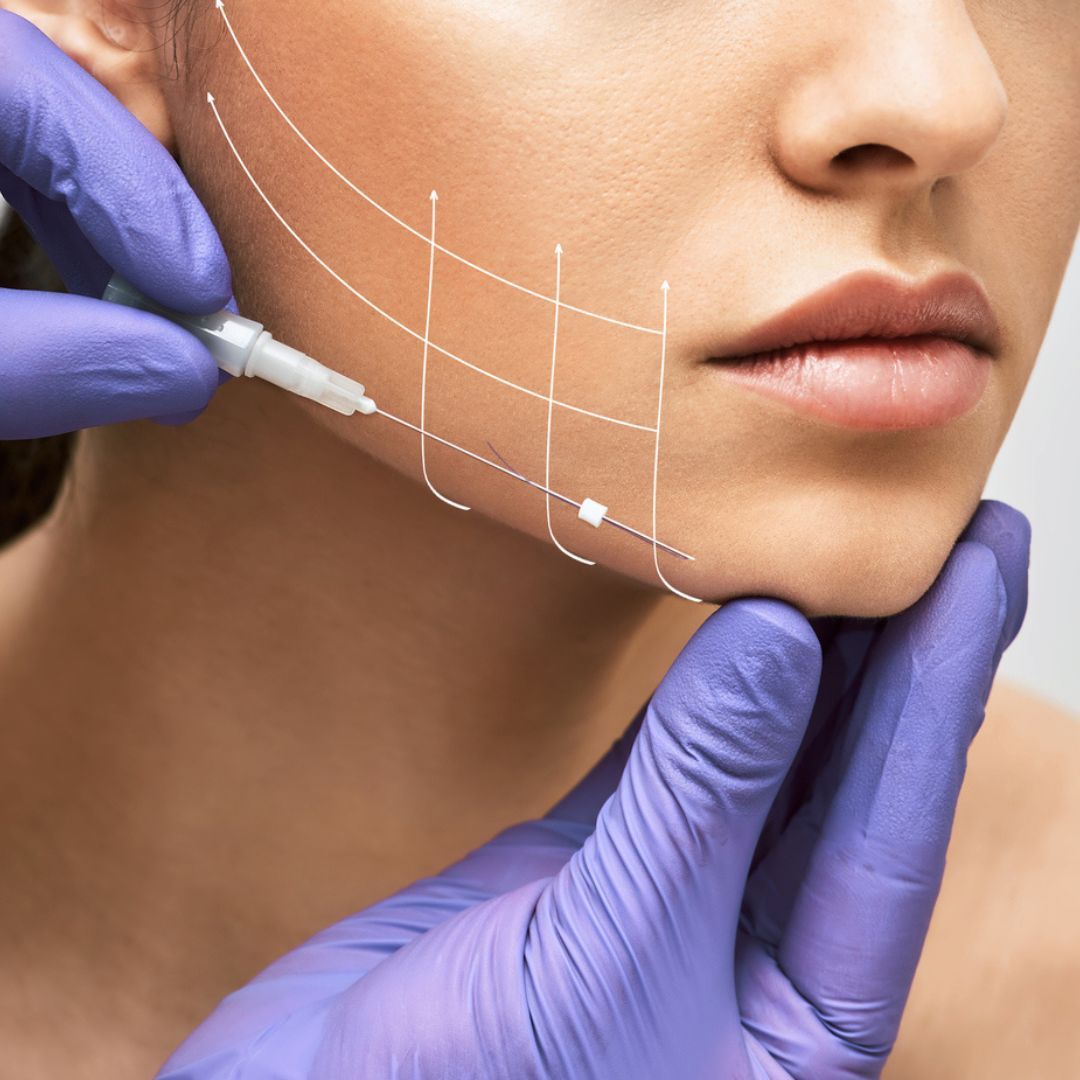
A thread lift uses dissolvable sutures placed under the skin to lift sagging tissue in the mid face, jawline or neck without surgery. The threads are inserted through a needle or cannula under local anesthetic, anchored to lift the tissue, and then dissolve over several months while stimulating collagen along their path. The appointment takes about forty five minutes to an hour, and most people return to normal activity within a few days.
The lift is modest by design, so threads suit mild to moderate sagging and cannot match what surgery achieves on heavier laxity. Patients weighing how much lift they need often compare it against a mini facelift, which repositions tissue surgically and lasts considerably longer. Results typically hold twelve to eighteen months as the threads dissolve. A consultation with a qualified provider will show whether your degree of sagging suits threads, and Beautifi can help with financing.




They do different things. Threads reposition tissue upward and suit mild sagging along the jawline or mid face. Injectable filler restores lost volume, which lifts the face indirectly by refilling the areas that have deflated. Many faces show both problems, and providers often use filler for volume and threads for repositioning rather than choosing one. Filler results appear immediately and last from six months to two years depending on the product; thread results appear over weeks and typically hold twelve to eighteen months. If the main change you see is hollowing rather than drooping, filler is usually the better starting point. An in-person assessment is what distinguishes the two patterns.
Thread lift is a cosmetic procedure that offers a less invasive alternative to facelift surgery. Thread lifts, also known as barbed suture lifts or thread facelifts, use dissolvable medical-grade sutures to stitch-up and tighten the skin. By inserting threads beneath the skin’s surface, regenerative elements in the body, such as collagen production, occur and tighten the skin, giving it an elastic, youthful appearance.
Unlike other anti-aging treatments, thread lifts are a natural way to combat the signs of aging while improving appearance. You may be a good candidate for a thread lift if you:
Are showing mild to moderate signs of aging (often individuals in the 30 to 55 age range)
Have loose skin around the face, neck, or other areas of the body
Are in good overall health
Are not pregnant or nursing
Do not smoke
Have realistic expectations
Thin, dissolvable sutures are threaded just beneath the skin’s surface, lifting, and repositioning the skin with tiny barbs, and tightening the skin around the face, neck, or torso. The “barbs” are painless and invisible, gripping the underlying tissue and activating the body’s healing response. When the body detects a suture material, it naturally stimulates collagen production. Collagen fills gaps in sagging skin, giving the skin a firm, smooth, elastic, and youthful appearance.
Step One – Anesthesia
A local anesthetic will be applied to the areas being treated, ensuring that there is no discomfort during the procedure.
Step 2 – Insertion of Threads
A type of polydioxnone (PDO) thread will be inserted just beneath the skin’s surface with a fine needle or cannula. Once inserted, the threads will be manipulated into tightening, lifting, and positioning the tissue, resulting in revitalized skin, added volume, and skin tissue support.
Step 3 – Positioning the Tissue
Your preferred provider will strategically position the tissue to achieve the most natural-looking and effective results. The physician will snip the ends of the thread and typically apply an antibiotic cream to the affected areas.
Depending on the complexity of the procedure, a thread lift can take anywhere from forty-five minutes to two hours to complete.
Following a thread lift procedure, patients may experience bruising, swelling, tightness, and soreness in the treated areas. All these sensations should subside within two to three weeks, but patients commonly return to work and normal activities within one or two weeks. It is critical to follow the instructions provided by the preferred physician, which may include two to three days of icing after the procedure, applying antibiotic ointment, and avoiding unnecessary pressure on the area treated. Strenuous exercise, excessive sweating, the sun, and dental appointments should also be avoided while recovering.
After the threads are placed, the results are immediately visible, but patients may notice a greater difference as swelling and bruising subside. As the threads are gradually absorbed by the body, collagen production will be stimulated, lifting the tissues. The process of collagen naturally forming around the thread, resulting in dramatic results, usually takes about three months.
Thread lifts are not considered permeant treatments. Over time the threads used in the procedure will be absorbed by the tissue beneath the skin. Threads can last anywhere from six months to three years, depending on factors such as thread thickness/type and how quickly the body metabolizes them. However, because of the natural stimulation of collagen production, elastin, and binding tissue in the body, the effects of a thread lift will last for months after the thread dissolves, resulting in effects lasting over a year.
For optimal, longer-lasting results, individuals often receive one to two treatments spaced about one month apart, followed by yearly maintenance treatments.
The cost of a thread lift varies depending on the area being treated and the number of maintenance treatments. In Canada, the cost of a thread lift typically ranges between $1,500 to $6,999.
A thread lift is a low-risk treatment, however, with any cosmetic procedure there can be adverse effects and side effects including, but not limited to:
Infection at the site of the procedure
Allergic reaction
Bleeding
Thread migration
Nerve damage
Damage to the salivary ducts
Formation of nodules
218/278 people who have undergone a thread lift rated the treatment “Worth It” (78%)
Source – Realself.com
 English English
  French


