Breast augmentation is one of the most common plastic surgery procedures in Canada, and it enhances the size and shape of your natural breasts. It is also used to replace volume lost through age, weight change, pregnancy or breastfeeding. If your main concern is sagging rather than volume, a breast lift may suit you better, and many surgeons combine the two.
Most patients in Canada pay between $8,000 and $12,000, depending on the surgeon, the implant and where you have the procedure. Beautifi can help you find a verified surgeon and compare payment plans so the cost is spread over time. Once you have decided on the implant type with your surgeon, you can apply online to see what you qualify for.


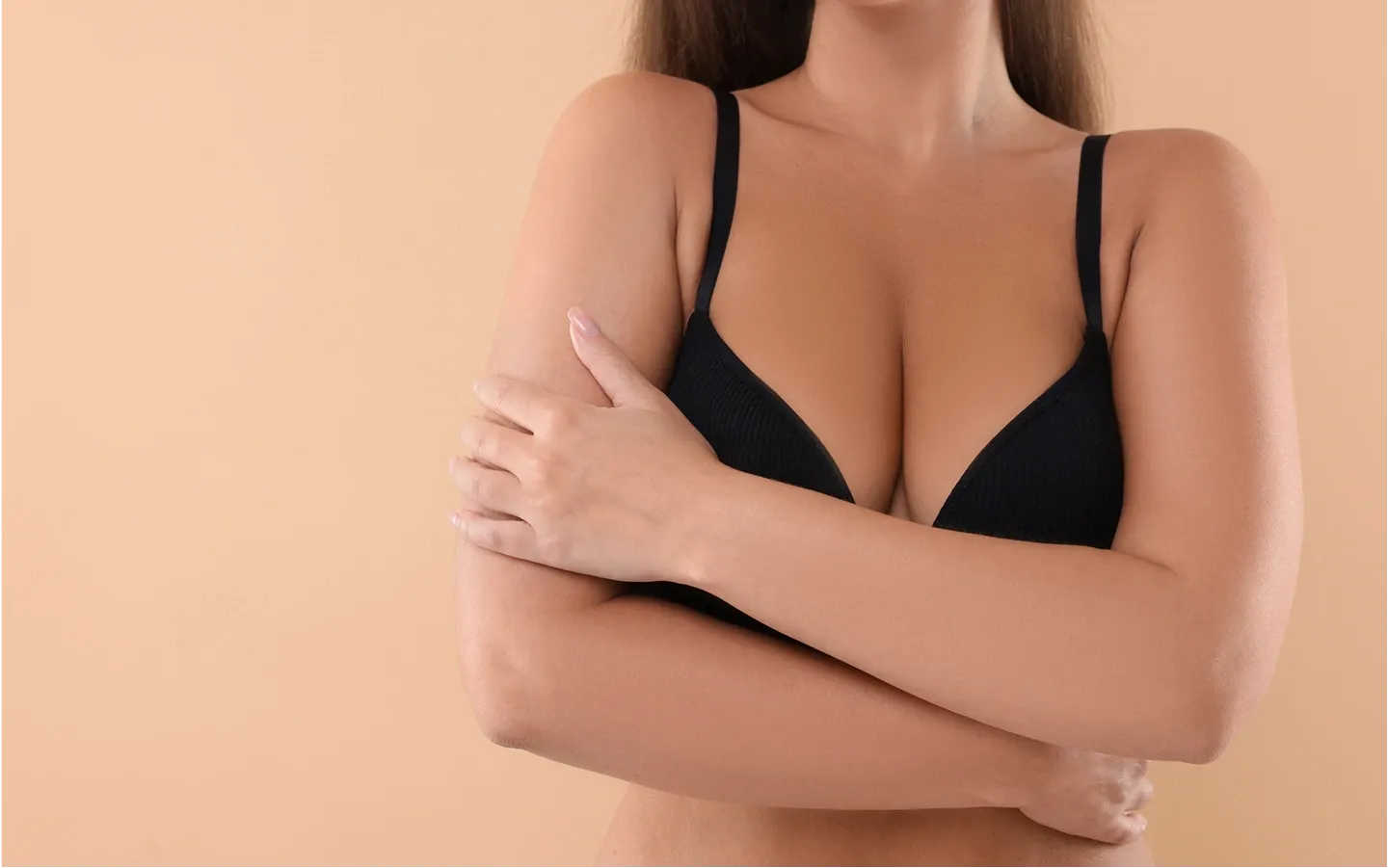


A breast augmentation is a very common plastic surgery procedure that enhances your natural breast size and shape, or replace volume that’s been lost with age, weight loss, pregnancy, or breastfeeding.
Generally, anyone who is in reasonably good mental and physical health can be candidates for breast implants. However, you are likely not a good candidate for this surgery if:
You’re pregnant or breastfeeding.
You have breast cancer or an abnormal mammogram.
You’re ill or battling an infection.
You have unrealistic expectations for post-surgery results.
You are under the minimum age for the implant you want. Health Canada and the FDA license saline implants from age 18 and silicone implants from age 22.
Most surgeons prefer that you do not smoke.
Saline breast implants: Saline breast implants are filled with saline water. They offer a firm feel to the breast.
Silicone breast implants: Silicone breast implants have silicone gel in them. In terms of consistency, they feel like fat. Most women feel that these implants give them a natural feel of the breast tissue.
Gummy bear breast implants: Gummy bear implants, also known as form-based implants, are a type of silicone breast implants. The consistency of the silicone gel inside the implant is thicker than traditional silicone gel implants. These implants are also firmer than traditional implants.
Round breast implants: Round breast implants are more likely to make the breasts appear fuller than form-stable implants.
After deciding to go for any of the above implants, you will also have to look for the type of outer shell you want the implant to be in:
Smooth breast implants: Smooth breast implants have an outer silicone rubber shell that is very smooth and soft. Because they do not attach to the surrounding breast tissue, they are usually freely moveable.
Textured breast implants: Textured breast implants have an outer silicone rubber shell with a rough and irregular surface. Because of their attachment to the tissue capsule around them, they are less likely to move. Textured shells are also the type linked to BIA-ALCL, a rare cancer of the immune system, and Health Canada suspended the licences for Allergan’s Biocell textured implants in 2019 for that reason — so this is worth discussing with your surgeon before choosing a textured implant.
Saline Pros:
Saline breast implants have been around for longer
Often less expensive than silicone
The incision required for saline breast implants is often smaller than that used for silicone breast implants – meaning that scarring is minimal
They can be tailored to your body more easily, and can be altered without the need to remove them
The solution that fills the implant can be safely absorbed by the body should a leak or rupture occur
Saline Cons:
Saline implants may be more easily seen under the skin and are more prone to show ripples (exceptionally thin patients or those with a small amount of natural breast tissue may be better served by silicone implants)
You may feel water sloshing
Some people say that the saline implants feel more firm than natural breast tissue
Silicone Pros:
Silicone implants more accurately mimic the look and feel of natural breast tissue
Less likely to result in dimples or wrinkles on the surface of the skin
Many more options for size, profile and shape
70% of women choose silicone implants
Silicone Cons:
More expensive
Silicone implants need imaging to check for a silent rupture: a screening ultrasound or MRI about 5 to 6 years after surgery, then every 2 to 3 years. It is a straightforward scan, and it does not apply to saline implants, where a rupture is usually obvious
Potentially larger incision and scar than saline implants
This depends upon your age, the type of look you desire, the cost of implants, the reason for getting the implants (such as post cancer surgery, volume loss, etc.) and the maintenance required for the implants.
(example: If your primary concern is making sure that your breast augmentation looks and feels natural, silicone implants are likely the right option for you).
When making your decision with your surgeon the following should be considered:
Body shape and size
Existing (or natural) breast size and shape (breast anatomy)
Desired look and feel – natural or fake, soft, medium, or hard
Amount of sagging or drooping (ptosis) of existing breasts
Amount and integrity of natural breast tissue
Lifestyle and physical activity
Likelihood of future pregnancy and breastfeeding
The positioning of the implant in the breasts can affect how it looks and feels. So, this depends on your desired look.
Placing the implants under the muscle usually creates a softer, more natural feel with both saline and silicone implants. This is often recommended for those with little to no existing breast tissue present as the extra layer of muscle will help limit implant visibility.
Placing the implant over the muscle, however, can be a viable option for women with adequate breast tissue present, and especially if there is extra skin (implants may look more natural using this technique). Additionally, patients typically experience an easier recovery since there is often less pain and a faster healing time. Your surgeon may recommend silicone implants with over the muscle placement, since they do not show rippling like saline can.
Both saline and silicone implants are generally considered safe if your breast augmentation surgery is performed by a reputable, board-certified surgeon. Although, some believe that saline implants are safer because if the implant ruptures, most of the salt water will reabsorb into the body. Many people think that silicone implants look and feel more natural, however, they do pose more of a risk if they rupture.
While the research on this is mixed, some studies have seen a correlation between silicone implants and autoimmune diseases. Both saline and silicone implants have silicone shells, so if you have an autoimmune disorder, you may want to avoid implants entirely or opt for saline.
As well, smaller implants generally have less complications than larger ones.
Saline: You’ll likely notice a saline rupture right away because the breast will look and feel deflated. The saline itself is sterile and is safely reabsorbed by the body. You will still need a small procedure to remove the empty implant shell. During the removal surgery, the doctor can add a new implant.
Silicone: Silicone ruptures are more difficult to detect, as the silicone can get trapped in the fibrous capsule that forms around the implant after surgery. This is sometimes known as a silent leak, but you may notice a slight change in breast size or feel a hardness. If left alone, leaking silicone can cause breast pain or cause the breasts to change shapes. You’ll need surgery to remove ruptured implants, during which a new implant can be inserted if desired.
Breast implants are not lifetime devices, but there is no fixed replacement date, and neither Health Canada nor the FDA recommends routine replacement every 10 years — that is a common misunderstanding.
Studies of first-time augmentation find about one in five patients has a revision or replacement within 8 to 10 years, which means roughly four in five do not. Modern silicone gel implants have a reported rupture rate under 3%, and rupture is rare in the first few years, with the risk rising gradually after about 6 to 10 years.
Most patients have only one or two replacements in a lifetime, and often by choice — weight change, pregnancy, breastfeeding, or simply wanting a different size — rather than because something has gone wrong. Your surgeon will tell you what to watch for, and if you have silicone implants, imaging is used to check for a silent rupture.
Finding the best breast augmentation surgeon in Canada involves thorough research. You’ll want to look at surgeon qualifications, experience, and reviews. At Beautifi, we make this process easy for you. Our platform offers a curated marketplace of verified doctors, including some of the top breast augmentation surgeons in Canada. We also understand that affordability is key, so we provide options for finance for breast augmentation, ensuring that cost doesn’t stand in the way of your desired procedure. Let Beautifi help you find the right surgeon for your breast augmentation needs.
Usually, your surgeon will measure your chest and breast size, as well as your height and weight. These measurements will be used to recommend the right implant to fit your existing proportions, a method known as Dimensional Breast Augmentation. You will also be given an opportunity to look at, feel and try on samples of the various implants available to you (known as breast implant sizers). Many surgeons also offer 3D imaging, so you can virtually see the results of different implant sizes and projections. Then they’ll make their recommendations for the surgery (including incision locations), make sure you understand the risks, and give you a run-down of the recovery process and timeline. Most surgeons also require a pre-surgery mammogram.
There are a few different options, but the procedure is most commonly performed with breast implants. Your surgeon will help you determine the best size, type, incision location, and placement for your body and desired outcome. After being placed under anesthesia, your surgeon will start by making an incision around the nipple, in the fold under your breast, or in the armpit. Then your implants with be placed in a pocket, either above or below your chest muscles. The incision is closed with internal stitches, and the skin is closed with stitches, skin adhesive, or surgical tape.
Another type of breast augmentation enhances your breast size using your own fat. This is performed via breast fat transfer, where your surgeon removes excess fat from one area (like stomach or thighs) via liposuction and then injects the fat after it’s purified into the breasts. You cannot get as much enhancement as you can with an implant – in general, a single session achieves around half a cup to one cup size and results are less predictable (asymmetry is possible if more fat survives on one side – only about 50-70% of cells survive the transfer). Because of the additional cost of liposuction, breast fat transfer is usually more expensive than breast augmentation with implants. Fat transfer breast augmentation carries a lower risk of impacting your ability to breastfeed, provided you’re not also having some kind of nipple surgery.
Breast augmentation surgery usually takes about 1.5 to 3 hours, depending on the implant, the placement and whether it is combined with another procedure such as a lift. It is normally a day procedure, so you go home once you have recovered from the anesthetic.
Yes, the surgery can be done under local anesthesia, where the patient remains awake and only the breast area is numbed to block the pain, or under general anesthesia, where the patient is put to sleep and is unable to feel pain. Most women receive general anesthesia for this surgery.
Your breasts will be covered with gauze after the surgery. You may have drainage tubes for up to two weeks and removed at a follow-up appointment. You will need to wear a surgical bra as you heal to provide support, minimize swelling, speed up recovery time, and help make you more comfortable as you heal.
The more you rest in the first 2 weeks, the quicker you will tend to recover and heal (most people are back to desk work within 1 to 2 weeks, with a full return to exercise taking about 4 to 6 weeks). You’ll need to hold off on sex for about two weeks, vigorous activity like running for about four weeks, heavy lifting for up to six weeks, and you may also need to sleep on your back for about six weeks to prevent implant deformation – depending on your surgeon’s recommendations.
Over-the-counter pain relievers such as acetaminophen may help relieve discomfort. Your doctor may also prescribe pain medication for you.
You will probably have some swelling in the area where the surgery was done. Over time, the swelling should ease, and the scars will fade.
Immediately after getting breast augmentation, patients experience an inflammatory process that causes swelling of the tissues combined with tightening of the chest muscles. This can give the breasts a tight appearance that may include breasts looking higher, smaller, and wider apart than they actually are. In general breast implants should “settle” within 6 weeks-3 months – one breast may settle before the other. This is normal and is nothing to be concerned about. Plastic surgeons sometimes call this “dropping and fluffing”. The breast implants drop into a lower position on the chest and expand in size as the pectoral muscle and breast tissues place less pressure on your implant.
Breast augmentation in Canada typically costs between $8,000 and $12,000, which starts at $160 a month with Beautifi financing. Where you land in that range depends on your city, your surgeon’s fee, the implant you choose, and anesthesia and facility charges.
Ask for a written quote that separates the surgeon’s fee from anesthesia and facility costs, and confirm whether follow-up visits and any revision surgery are included.
Yes, you can finance a breast augmentation! Beautifi provides specialized financing for cosmetic procedures. They offer several benefits, such as:
Flexible payment plans: Beautifi allows you to spread the cost of your procedure over a period of time, making your procedure more affordable.
Quick approval process: Their quick and easy application process can result in immediate funding, allowing you to schedule your procedure without delay.
Customized plans: They offer tailored plans based on your specific needs and financial situation.
Low-interest rates: Beautifi provides competitive interest rates compared to traditional loans.
While the majority of breast implant operations go smoothly, there are risks associated with the procedure such as:
Scar tissue that distorts the shape of the breast implant (capsular contracture)
Breast pain
Infection
Changes in nipple and breast sensation
Implant position changes
Implant leakage or rupture
Future breastfeeding complications – you should still be able to safely breastfeed with implants, but any breast surgery (and specifically the incision around the nipple) can potentially damage milk ducts, so there is a risk of insufficient milk production
Breast implant-associated anaplastic large cell lymphoma (BIA-ALCL) — a rare cancer of the immune system, linked mainly to textured implants rather than smooth ones. Published estimates of lifetime risk with textured implants range from roughly 1 in 2,000 to 1 in 30,000, and it is usually treatable when found early, most often by removing the implant and the surrounding capsule. Tell your surgeon if you notice persistent swelling, a fluid collection or a lump around an implant.
Persistent systemic symptoms such as fatigue, joint pain and brain fog, sometimes called breast implant illness. The cause is not established and the symptoms are not specific to implants, but they are real for the people who report them, many improve after removal, and regulators require implant makers to warn about them. Raise any new ongoing symptoms with your surgeon.
On RealSelf, a patient review site, about 97% of roughly 4,600 people who reported a breast augmentation with implants rated it “worth it”. These are self-selected reviews rather than a clinical outcome study, so read the number as a signal that most patients are satisfied, not as a prediction of your own result.
Satisfaction tends to track how closely the plan matched what someone wanted going in, so the most useful thing you can do is be specific with your surgeon about the size and shape you are after, and ask to see before-and-after photos of patients with a similar starting point.
 English English
  French


