Nipple reduction treats prominent/elongated (hypertrophic) nipples using small, targeted excisions to reduce height and/or width while maintaining natural contour. Techniques include circumferential “collar” skin excision, wedge/core reduction, amputation with secondary healing, and local flaps; choice depends on your anatomy and goals. A 2019 literature review (639 patients) found high satisfaction and low complication rates, with technique selection individualized.
Most isolated nipple reductions are short in-office procedures under local anesthesia; if combined with other breast surgery, they’re often done under general anesthesia. Typical wounds epithelialize in ~7–14 days. Nipple reduction is one of several nipple surgery options, which also include correction of inverted nipples and areola reduction.


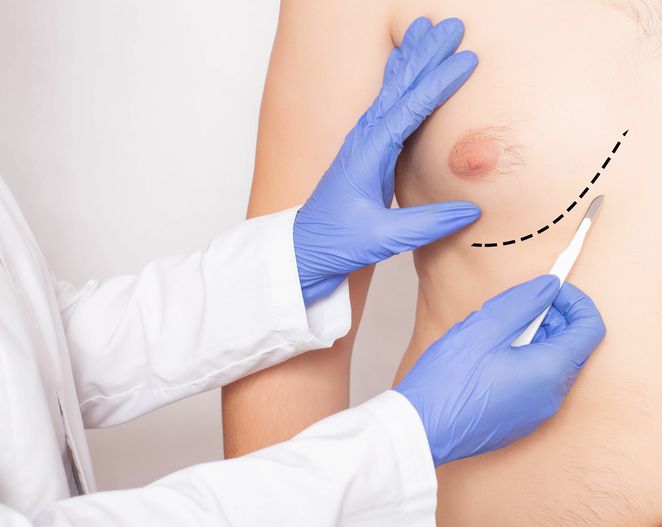
There will be scars, but they are placed to fall in the natural transitions of the nipple and areola, and in most people they become hard to see once mature. Scars take a good six to twelve months to fade, so the marks you see at a few weeks are not the ones you keep. The reduction itself is permanent, because tissue has been removed rather than repositioned, and the nipple does not regrow. What can still change the appearance afterwards is pregnancy, breastfeeding or a significant change in weight, all of which alter the breast as a whole. A small number of people need a minor revision for asymmetry or a notch in the contour, which is usually a straightforward in-office adjustment.
After marking desired dimensions, your surgeon removes a small ring, wedge, or tip segment and reshapes the nipple with fine sutures (or lets a small tip wound contract/epithelialize in amputation techniques). Local anesthesia is typical for isolated cases; general if combined with lift/augmentation/reduction.
Adults in good health bothered by projection/size asymmetry from genetics, pregnancy, or aging. If you plan pregnancies soon, discuss timing given potential breastfeeding impact (see below).
Most patients maintain normal sensation, though temporary sensitivity changes are common; a minority report reduced sensation long-term in case series. Technique and concurrent procedures influence risk.
Evidence is limited. Reviews note few documented breastfeeding outcomes; techniques that preserve ducts (certain flaps/wedge variants) are preferred for patients who may lactate, while amputation-type reductions can disrupt ducts and may reduce milk transfer. If future breastfeeding is a priority, raise this at consult to guide technique or timing.
Generally low but include bleeding, infection, asymmetry/under- or over-correction, contour notching, widened scar, changes in sensation, and breastfeeding difficulties depending on technique. Selecting an experienced, board-certified surgeon lowers risk.
Nipple reduction changes the projecting centre; areola reduction decreases the pigmented circle’s diameter (often using a circular excision and purse-string closure). They can be done together or with a lift/augmentation.
A reasonable Canada-wide guide: ~C$1,500–$4,000+ depending on surgeon, facility, and whether it’s paired with other breast surgery. Your consultation provides an exact quote.
Yes — commonly done with areola reduction, a breast reduction, breast lift, augmentation, gynecomastia surgery, or implant removal, to balance proportions in one recovery where that is appropriate. Combining usually means a general anaesthetic rather than the local anaesthetic an isolated nipple reduction needs, and your recovery then follows the larger operation.
Most people are back to desk work within a day or two. Expect the area to be dressed and tender for the first week, with sutures either dissolving or being removed at around seven to fourteen days. Sleeping on your back and wearing a soft, non-compressive bra or a light dressing helps protect the repair while it settles. Strenuous exercise, and anything that rubs the area, is usually deferred for two to four weeks, and your surgeon will give you a specific clearance rather than a general rule. Swelling settles over the first month, but the final shape and the appearance of the scars go on refining for several months after that.


 English English
  French


